Tree Removal Insurance Coverage Review: 2026 Guide

Table of Contents
What Tree Removal Insurance Actually Covers (and What It Doesn't)
Covered Perils: Wind Damage, Storm Damage, and Hazard Removal
Policy Exclusions: Preventative Maintenance and Tree Health
Homeowners Insurance Tree Removal Coverage: When It Pays
The Sub-Limits Most Homeowners Never Read
Step-by-Step: Filing a Tree Removal Claim
When Not to File
General Liability vs Workers Compensation for Tree Companies
Commercial Auto and Equipment Breakdown: The Gaps Most Policies Miss
How to Verify Tree Service Insurance Before You Hire
Homeowner vs. Contractor Liability: Who Pays When a Tree Hits Your House?
What Drives Insurance Premiums for Tree Removal Companies
How Underwriters Actually Classify the Work
What This Means for Homeowners
Conclusion: Protecting Your Property and Your Wallet
Frequently Asked Questions
Last Updated: September 16, 2026
What Tree Removal Insurance Actually Covers (and What It Doesn't)
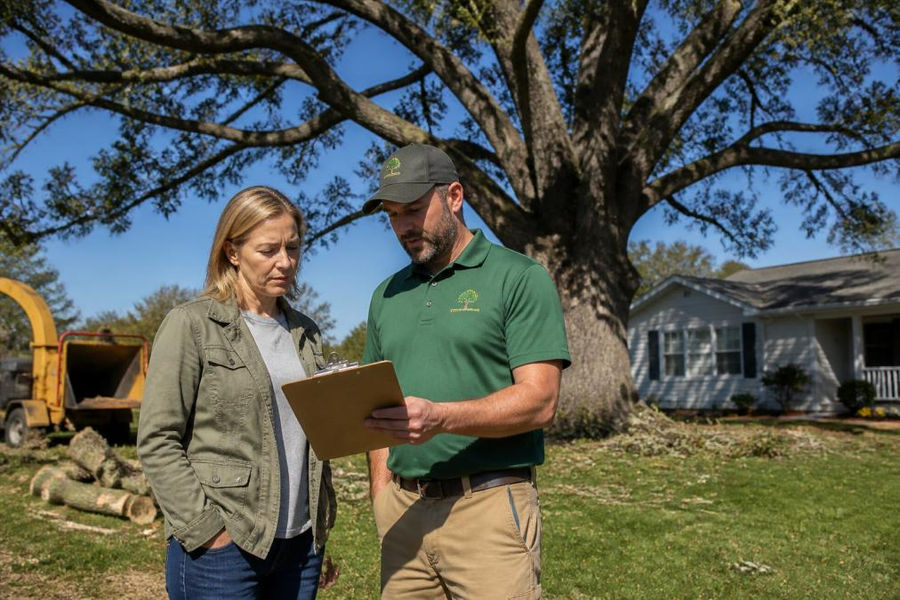
Tree removal insurance pays for removing or repairing trees when a specific, sudden event damages them or your property. It is not a maintenance plan, a distinction that trips up more homeowners than almost anything else. At Anderson Tree Care, we field questions about this every week.
Covered Perils: Wind Damage, Storm Damage, and Hazard Removal
Wind damage and storm damage trigger most tree-related payouts. When a covered peril knocks a tree onto a structure, most standard policies treat removal as part of the property damage claim, up to policy limits.
Policy Exclusions: Preventative Maintenance and Tree Health
Preventative maintenance is almost never covered. Trimming, pruning, and removing a tree because it is dead, diseased, or dying are owner responsibilities, not insurance events. The Insurance Information Institute's guide to homeowners insurance frames this clearly: maintenance is about preventing losses, and policies pay for losses that already happened.
Watch Out The single most expensive mistake we see is a homeowner who skips removal of a dead tree, then files a claim after it falls. Insurers routinely deny these because the hazard was visible and preventable. You pay for the removal either way, just without help.
Homeowners Insurance Tree Removal Coverage: When It Pays
Homeowners insurance tree removal coverage typically pays when a covered peril, windstorm, hail, or lightning, causes a tree to fall and damage a covered structure. Removal is then bundled into the property damage claim.
The rules narrow once the tree misses your house:
Tree hits a covered structure: removal is usually covered, subject to your deductible and policy limits.
Tree blocks a driveway or ramp: many policies cover removal up to a modest sub-limit.
Tree falls in the open yard: removal is generally your expense.
Tree was already dead or diseased: removal is generally excluded.
The Sub-Limits Most Homeowners Never Read
Even when a claim is approved, the payout is rarely the full invoice. Standard HO-3 policies cap tree debris removal at a per-tree dollar limit plus a separate aggregate limit per event, often a few hundred dollars per tree, with a total cap one large oak can exhaust alone. Anything above that cap comes out of your pocket.
Two more limits matter:
The deductible still applies. If it exceeds the removal cost, filing may not be worth it, and a claim on your record can affect future premiums.
Removal is often tied to structure damage. If the tree damages your roof, removal folds into the dwelling claim. If it only blocks the driveway, you are in the sub-limit bucket.
Step-by-Step: Filing a Tree Removal Claim
Most articles explain what is covered but skip how the claim works. Here is the sequence:
Document before you touch anything. Photograph the tree, its position, the damage, and the surroundings from multiple angles. Note the date and weather event, insurers weigh contemporaneous evidence heavily.
Mitigate further damage. Prevent additional loss, tarp a roof, board a window, move valuables. Keep every receipt; reasonable mitigation costs are often reimbursable.
Do not haul the tree away yet. Some insurers inspect the fallen tree to confirm cause (wind vs. rot vs. disease). Confirm with your adjuster before debris leaves the property.
File the claim promptly. Most policies require prompt notice. Delays give the insurer grounds to question causation.
Get an independent removal estimate. A written quote from a licensed tree service gives the adjuster a number and protects you if the insurer's estimate is low.
Meet the adjuster on site if possible. Walk the property together and point out the hazard, damage, and any pre-existing documentation.
Review the settlement against the invoice. If the payout is short, ask for the specific policy language relied on. Sub-limits and exclusions must be cited, not implied.
Pro Tip Keep a dedicated folder, digital or paper, with the photos, the weather report for that date, the removal estimate, and every email with the insurer. Claims that are easy to verify tend to settle faster and closer to the actual cost. When Not to File A claim is not always the right move. If removal cost is close to your deductible, or you have filed other claims recently, paying out of pocket protects your loss history. One tree-related claim rarely causes non-renewal, but a pattern of small claims can. Ask your agent how a claim would affect your policy before filing. General Liability vs Workers Compensation for Tree Companies General liability and workers compensation cover two different risks, and a tree company needs both. General liability handles third-party claims: a limb drops on a neighbor's car, a crew damages a fence, or someone is injured on your property because of the work. Workers compensation covers the crew itself when an employee is hurt on the job. Coverage Type What It Protects Who It Pays Why Homeowners Care General liability Third-party injury, property damage The injured party or property owner Covers damage to your home or a neighbor's Workers compensation Employee injuries on the job The injured crew member Keeps injury claims off your policy Commercial auto Vehicles hauling equipment Other drivers and their property Covers road accidents en route Commercial property The company's own equipment The tree company Signals a stable, established operation Commercial Auto and Equipment Breakdown: The Gaps Most Policies Miss Commercial auto covers the trucks and chippers moving through your neighborhood; equipment breakdown handles a failed hydraulic system or seized chipper engine. Neither protects your house directly, but both signal whether a company is running a real operation. Ask for the certificate of insurance before work starts, not after. A legitimate company will email it within the hour. If you get excuses about "the office" or "our agent is out," treat that as your answer.
How to Verify Tree Service Insurance Before You Hire
Verifying tree service insurance takes about ten minutes and protects you from a five-figure mistake. Our recommended process:
Request a certificate of insurance (COI) directly from the company.
Confirm the general liability policy is active and lists the correct business name.
Confirm workers compensation coverage for every crew member who will be on site.
Check commercial auto if vehicles or chippers will be in your driveway.
Call the insurance agent listed on the certificate to confirm the policy is current.
Verify the policy limits are high enough to cover your home's value.
Keep a copy of the COI until the job is complete.
Key Takeaway A certificate of insurance is only useful if you actually call the agent to confirm it. Forged and expired certificates exist, and a two-minute phone call closes that gap.
Homeowner vs. Contractor Liability: Who Pays When a Tree Hits Your House?
Contractor liability applies when the tree company's work causes the damage. If a crew drops a limb through your roof during removal, that is on the contractor's general liability policy, not yours. Your homeowners policy steps in when a natural event, not the work itself, causes the loss.
What Drives Insurance Premiums for Tree Removal Companies
Insurance premiums for tree removal companies reflect how dangerous the work is. Aerial work, chainsaws, heavy equipment, and proximity to homes and power lines push rates up, and underwriting is strict because the loss history is unforgiving.
The factors that move premiums most:
Crew size and payroll: more employees means more workers compensation exposure, and workers compensation is typically the single largest line item for a tree service.
Revenue and job mix: emergency storm work costs more to insure than routine trimming. A company that markets itself as a 24/7 storm-response operation carries a different risk profile than one doing scheduled pruning.
Equipment value: chippers, cranes, and bucket trucks raise commercial property and auto premiums. A crane is a different underwriting conversation than a pickup and a chipper.
Claims history: a clean record over several years is the single biggest discount. Most carriers look at a three-to-five-year loss run.
Safety training and certifications: documented programs lower risk in the underwriter's eyes. Certifications from recognized arborist bodies and documented safety programs carry real weight.
Subcontractor use: if a company subcontracts climbing or crane work, the underwriter wants to see certificates from those subs. Uninsured subs are a common reason claims get denied.
How Underwriters Actually Classify the Work
Tree care does not fit one insurance class. Carriers split the work into tiers, routine trimming and removal, large-diameter or crane-assisted removal, and line-clearance or utility-adjacent work, each with a different rate. A company that tells its agent it does "tree work" without specifying the tier is either overpaying or underinsured for what it actually performs.
What This Means for Homeowners
You are not paying the premium, but you are reading its signals:
A very low quote is a data point, not a deal. It often means minimum limits, no workers compensation, or both.
Ask what tier of work they are insured for. If the job needs a crane and the policy excludes crane operations, you have a problem.
Ask about subcontractors. If the climber or crane operator is a sub, request that sub's certificate too.
Ask for the loss run summary, not just the COI. A certificate shows coverage today; a loss run shows how the company has behaved over time.
Premium factors are not just the company's problem. They are the clearest public signal of how seriously a tree service treats risk, and how likely your property is to be protected when something goes wrong.
Conclusion: Protecting Your Property and Your Wallet
The gap between a covered claim and an out-of-pocket disaster comes down to one thing: whether the company you hired was actually insured. A verified certificate, an agent-confirmed policy, and a written hazard assessment are worth more than any discount.
Frequently Asked Questions
What insurance should a tree removal company have?
A tree removal company should carry general liability insurance to cover property damage and bodily injury, workers' compensation for employee injuries, and commercial auto insurance for vehicles used on the job. Some also carry equipment breakdown coverage. General liability typically covers damage to your home or fence, while workers' comp protects you from liability if a crew member gets hurt on your property. Always ask for a certificate of insurance before work begins.
How can I verify that a tree service provider has active insurance?
Ask for a Certificate of Insurance (COI) and call the insurance company directly to confirm the policy is active and the coverage limits are sufficient. The COI should list the tree company's name, policy numbers, effective dates, and coverage types. Do not rely on a photocopy alone, as policies can lapse. A legitimate provider will willingly provide this information and may offer to list you as an additional insured for the project.
Does homeowners insurance cover tree removal if the tree hasn't fallen yet?
Standard homeowners insurance generally does not cover preventative tree removal, even if a tree is dead or dying, because it is considered maintenance. However, if a tree is damaged by a covered peril like wind damage or storm damage and creates a hazard, some policies may help with removal costs. Review your policy limits and deductible, and document the tree's condition with photos before calling your insurer.
What happens if a tree service damages my property and they are uninsured?
If an uninsured tree service damages your property, you may have to file a claim with your own homeowners insurance, which could raise your premium or leave you paying out of pocket. You could also pursue legal action against the company, but recovering money from an uninsured business is often difficult. This is why verifying a certificate of insurance and confirming general liability coverage before work starts is critical.
Should I ask for a Certificate of Insurance (COI) before work begins?
Yes. Always request a COI before any tree trimming or tree removal work starts. The COI proves the company carries general liability and workers' compensation coverage. Verify the policy limits match the job's risk level, and confirm the insurance agent's contact information. If a company hesitates or cannot provide a COI, treat it as a red flag and find another provider.
Call or Text for estimate


Comments