Signs of Root Rot in Tree Stumps: What to Look For

Table of Contents
What Root Rot Looks Like: Visual Signs of Root Rot in Tree Stumps
Soft or Spongy Wood Texture
Discoloration and Staining
Bark Deterioration
Mushrooms Growing on Tree Stump: What Fungal Growth Means
Types of Fungi That Indicate Decay
Why Fungi Appear on Rotting Stumps
Signs of Tree Root Decay: Beyond Surface Symptoms
Odor and Moisture Indicators
Pest Infestation and Insect Activity
How Stump Grinding Addresses Root Rot Problems
What Grinding Actually Removes
Grinding vs. Full Stump Removal
Restoring the Site for Grass or Replanting
Preventing Future Root Issues After Grinding
Stump Grindings Disposal: Managing Debris After Removal
Estimate Your Volume First
Fresh vs. Aged Grindings: When to Use Each
Species and Material Cautions
Composting Grindings Successfully
Contamination and Disease Precautions
Hauling and Municipal Options
Reusing Grindings Safely
Can Root Rot Spread From a Stump to Nearby Trees?
When to Call a Professional for Root Rot Assessment
Frequently Asked Questions
Last Updated: October 14, 2026
What Root Rot Looks Like: Visual Signs of Root Rot in Tree Stumps
Root rot is the decay of wood tissue caused by fungi that break down the tree's cellular structure. Recognizing the visual signs of root rot in tree stumps helps you decide whether to remove or treat the stump before it spreads.
The earliest indicators appear on the stump's surface: soft spots develop where fungi have begun their work, and the wood becomes spongy to the touch. Once decay starts, it progresses quickly.

Soft or Spongy Wood Texture
The most reliable sign of root rot is a change in wood density.
Affected areas feel like wet sponge and may crumble under pressure, advanced decay where fungi have consumed much of the wood structure.
Wood softens from the inside out, so the surface may look normal while the interior has deteriorated.
Discoloration and Staining
Rotting wood changes color: dark streaks, black or brown patches, or water-stained areas mark where fungi have colonized.
White or grayish patches indicate active fungal growth, and the stump turns darker and more mottled than healthy wood.
Discoloration spreads outward from the center as rings of darker wood around lighter areas, showing decay progressing from the interior outward.
Bark Deterioration
Healthy bark clings tightly to the wood beneath, but rotting wood causes bark to separate, become brittle, and flake off.
Where bark is missing or hanging loosely, you'll often find soft, discolored wood underneath. Since bark protects wood from insects and moisture, its loss accelerates decay.
Mushrooms Growing on Tree Stump: What Fungal Growth Means
Mushrooms or fungal fruiting bodies on a tree stump are a clear signal that root rot is actively progressing, they're the reproductive structures of organisms already breaking down the wood.
Visible mushroom growth means the root system and stump interior are already heavily colonized, an advanced stage of decay.
Types of Fungi That Indicate Decay
Several fungal species cause stump rot. Shelf or bracket fungi appear as flat growths protruding from the stump and signal serious decay within.
Wood-ear fungi look like dark, gelatinous cups; honey mushrooms grow in clusters of small, tan mushrooms; turkey tail fungi display colorful, fan-shaped fruiting bodies.
Each type indicates the wood is decomposing, visible fruiting bodies mean decay is well underway.
Why Fungi Appear on Rotting Stumps
Fungi need moisture and dead wood to grow.
Fungi don't cause root rot, they're the result of it. They arrive once conditions are right, accelerate decay, and confirm that decay is active and spreading.
Warm, wet conditions speed fungal growth. Stumps in shaded areas with poor drainage see faster colonization.
Signs of Tree Root Decay: Beyond Surface Symptoms
Decay extends deeper than the stump's surface. The root system beneath continues to rot, and this hidden decay poses risks to nearby trees and your property.
Odor and Moisture Indicators
A rotting stump produces a distinctive smell. Fresh wood has little odor; decaying wood smells musty, earthy, or like wet compost.
High moisture content signals decay. Poke the stump with a tool.
The stump may feel cold and damp even in dry weather, a sign that fungi have altered the wood's structure.
Pest Infestation and Insect Activity
Decaying stumps attract insects. Carpenter ants, termites, beetles, and other wood-boring insects colonize soft, rotting wood. Sawdust around the base or insects coming and going mean decay is feeding a pest population.
Insects accelerate decay by tunneling through the wood and creating entry points for more fungi, making the stump a growing problem.
How Stump Grinding Addresses Root Rot Problems
Stump grinding doesn't just make the stump disappear, it destroys the wood fungi and insects feed on. Knowing what grinding does and doesn't remove helps you decide whether it's enough.
What Grinding Actually Removes
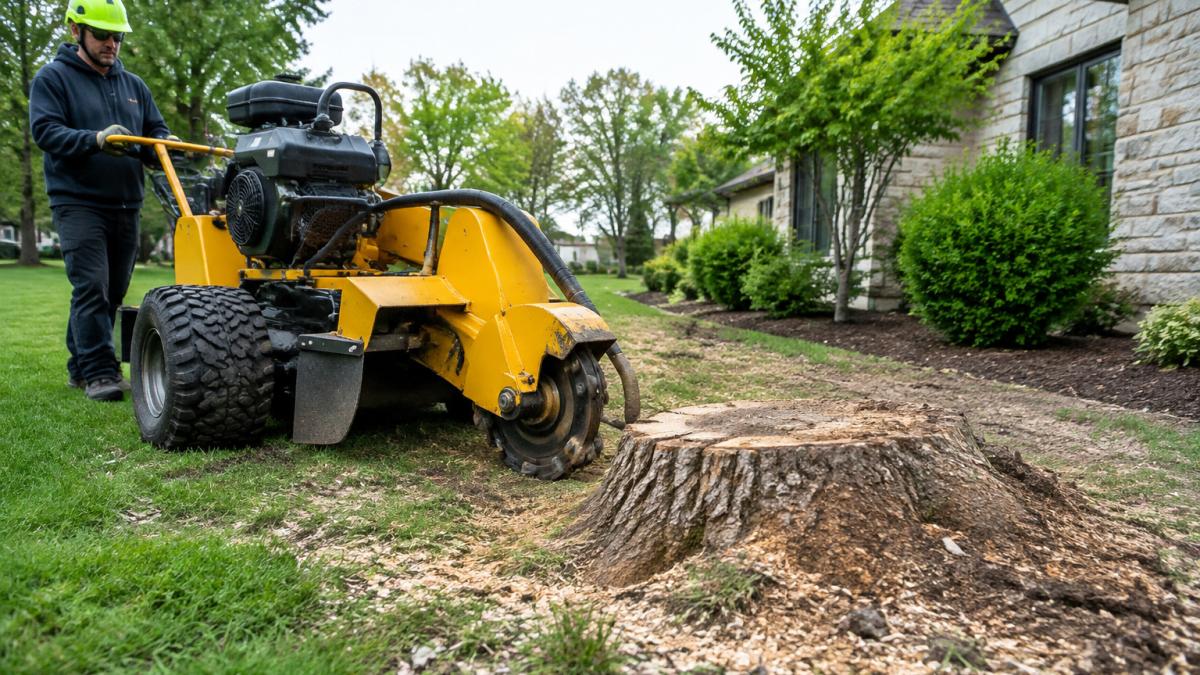
A stump grinder uses a carbide-toothed cutting wheel to chip the stump into small pieces, typically working 6 to 12 inches below grade.
What's removed:
The above-ground stump and the top portion of the root flare.
The bulk of the woody tissue that fungi colonize.
What's not removed:
Large lateral roots extending outward from the stump. These can remain in the soil for years.
The deeper taproot or sinker roots on some species.
Fungal mycelium already established in the surrounding soil.
That distinction matters. Grinding eliminates the primary food source, starving most decay fungi, but if rot has already spread into a neighboring tree's roots through root grafts or soil contact, grinding won't cure the neighbor.
Grinding vs. Full Stump Removal
Factor | Grinding | Full Removal |
Depth reached | 6-12 inches below grade | Entire stump and major roots |
Disruption to yard | Moderate | Extensive |
Cost range | Lower | Higher |
Best for | Most residential stumps | Replanting in the exact spot, structural concerns |
Root rot control | Removes main food source | Removes nearly all woody tissue |
For most homeowners, grinding is sufficient. Choose full removal when pouring a foundation, installing a patio, or replanting a large tree in the same footprint.
Restoring the Site for Grass or Replanting
A freshly ground stump leaves a hole filled with chips and mixed soil, which grass and new plants struggle in because it's carbon-heavy and drains unevenly. Here's a sequence that works:
Remove or settle the debris. Rake out the largest chips and visible roots. If replanting, remove chips down to native soil, they take years to decompose in place.
Backfill with topsoil. Fill the hole and crown it slightly above grade so it settles level. A 12-inch stump hole needs 1 to 2 cubic yards of fill.
Let it settle. Water the fill, let it settle 2 to 4 weeks, and top off low spots.
Amend if needed. Mix in compost to improve structure. Avoid fresh grindings as the primary fill.
Establish turf or a replacement plant. Sow grass seed at the right timing for your region, or plant a shrub or small tree suited to the site.
Pro Tip If the stump was diseased, don't replant the same species in the same spot. Choose a species not known to host the same pathogen, and consider a raised bed or container for the first season.
Preventing Future Root Issues After Grinding
Once the stump is gone, a few habits keep the site healthy:
Monitor nearby trees. Watch for mushrooms, conks, or canopy dieback on trees within 10 to 15 feet.
Manage moisture. Root rot fungi thrive in saturated soil. Fix drainage and avoid overwatering near the old stump site.
Avoid wounding roots. Don't rototill deeply or drive heavy equipment over remaining trees' root zones.
A certified arborist can assess whether remaining roots pose a risk and whether the site is safe for replanting.
Stump Grindings Disposal: Managing Debris After Removal
Once the stump is ground, you're left with a pile of wood chips, bark fragments, and soil. A 12-inch stump produces roughly 1 to 2 cubic yards of grindings; a 24-inch stump can yield 3 to 5 cubic yards, enough to fill a pickup bed several times over, so plan before the grinder leaves.
Estimate Your Volume First
A cubic yard is 3 feet by 3 feet by 3 feet, about 27 cubic feet. Measure your pile's length, width, and average height in feet and multiply.
That number drives your disposal decision:
Under 1 cubic yard: Easy to spread by hand as mulch or work into a compost pile.
1 to 3 cubic yards: Manageable with a wheelbarrow and a few weekends, or a single haul-away trip in a pickup or trailer.
Over 3 cubic yards: Consider a roll-off dumpster, a municipal green-waste drop-off, or having the grinding crew haul it away.
Fresh vs. Aged Grindings: When to Use Each
Fresh grindings are high in carbon and low in nitrogen. As soil microbes break them down, they temporarily tie up nitrogen at the soil surface, nitrogen immobilization, which can stunt shallow-rooted plants if tilled directly into a bed.
Use fresh grindings for:
Pathways and walkways where nothing is growing underneath.
Top-dressing around established trees and shrubs in a layer no more than 2 inches deep, kept at least 6 inches from trunks and stems.
Compost feedstock where you'll balance the carbon with nitrogen-rich material.
Let grindings age 6 to 12 months before using them as garden-bed mulch or soil amendment; aged material has lost much of its nitrogen-draw.
Watch Out Never pile fresh grindings more than 4 inches deep against a trunk, stem, or foundation. Thick layers trap moisture, invite fungal growth, and can smother surface roots.
Species and Material Cautions
Not all grindings behave the same. A few species warrant extra care:
Black walnut, butternut, and hickory contain juglone, which can injure sensitive plants like tomatoes, peppers, and some ornamentals. Aged, composted walnut grindings are safer than fresh, but keep them away from vegetable beds if unsure.
Cedar, cypress, and other resinous woods break down slowly and can suppress seed germination when fresh. Use them for paths or age them a year or more before garden use.
Eucalyptus and some pines contain aromatic oils that slow decomposition. Fine for paths and ornamental beds, not ideal for vegetable gardens.
If you don't know the species, treat the pile as "general purpose", paths, compost, or haul-away, not a garden amendment.
Composting Grindings Successfully
Wood chips compost well when you balance carbon with nitrogen. Start with roughly 3 parts grindings by volume to 1 part nitrogen-rich material, grass clippings, coffee grounds, kitchen scraps, or fresh manure from a trusted source.
Moisture: Aim for the consistency of a wrung-out sponge. Squeeze a handful; a drop or two of water should appear.
Aeration: Turn the pile every 2 to 4 weeks; without oxygen it goes anaerobic and smells like sour vinegar.
Temperature: An active pile reaches 130°F to 160°F in the core; a compost thermometer confirms it's working (the EPA).
Sift out any chunks larger than 1 inch and return them to the next pile.
Contamination and Disease Precautions
If the stump showed signs of root rot, fungal conks, or pest infestation, the grindings may carry spores, insect eggs, or larvae. Don't spread that material around healthy trees or garden beds.
Responsible options for suspect material:
Municipal green-waste facility: Most accept wood debris and compost it at pathogen-killing temperatures.
Commercial composting: High-heat windrow systems reach temperatures home piles rarely match.
Landfill or burn: A last resort where local rules allow; check with your city or county first, since many areas restrict yard-debris burning.
Key Takeaway When in doubt, haul it out. A few dollars of disposal is cheaper than losing a mature shade tree to spread decay.
Hauling and Municipal Options
Call your city or county waste department before loading a trailer. Rules vary widely:
Many municipalities operate yard-waste drop-off sites that accept stump grindings, often free or for a small fee.
Curbside yard-waste pickup usually excludes large volumes of wood chips; check weight and container limits.
Rentals include a pickup truck, dump trailer, or roll-off dumpster. A 10-yard dumpster holds about 10 cubic yards and suits a single large stump.
Reusing Grindings Safely
For clean, disease-free grindings, reuse is the best outcome:
Mulch around trees and shrubs: 2 to 3 inches deep, pulled back 6 inches from trunks.
Garden paths: 3 to 4 inches deep over landscape fabric to suppress weeds.
Compost: Follow the carbon-to-nitrogen guidance above.
Aged grindings mixed with topsoil at roughly 1 part grindings to 2 parts soil make a decent amendment for ornamental beds.
Can Root Rot Spread From a Stump to Nearby Trees?
Root rot can spread to nearby trees through root contact: when a healthy tree's roots touch decaying roots from a dead stump, fungi can colonize the living roots.
Risk decreases with distance.
Removing the stump eliminates this risk entirely by taking out the decay source before fungi can spread to neighboring trees.
When to Call a Professional for Root Rot Assessment
A certified arborist can evaluate the stump's condition, assess whether decay threatens nearby trees, and recommend removal or other treatment.
Early removal of rotting stumps prevents problems.
Rotting stumps create ongoing risks: decay spreads through root systems and attracts pests that damage healthy trees.
Frequently Asked Questions
What are the signs of root rot in a tree stump?
Root rot in tree stumps shows through soft or spongy wood that crumbles easily when pressed, dark discoloration or staining inside the wood, and deteriorating bark. You may also notice a musty or rotten odor, fungal growth like mushrooms, and increased pest activity. These signs indicate that decomposition is well underway and the stump poses a hazard to nearby trees and landscaping.
Can mushrooms growing on a tree stump indicate decay?
Yes. Mushrooms and other fungi growing on a stump are a clear indicator of active decomposition and root rot. Fungi break down dead wood as part of the natural decay process. While fungi themselves aren't harmful to your yard, their presence confirms that the stump is rotting and should be removed through stump grinding to prevent the decay from spreading underground to nearby roots and trees.
Can root rot spread from a stump to nearby trees?
Root rot can spread to nearby trees through root contact: when a healthy tree's roots touch decaying roots from a dead stump, fungi can colonize the living roots. Removing the stump through professional stump grinding eliminates this risk and protects the health of surrounding landscaping.
What should I do with stump grindings after removal?
You have several options for stump grindings disposal. If the stump was healthy, you can reuse the grindings as mulch in garden beds or around trees, or add them to a compost pile. However, if the stump showed signs of root rot, disease, or pest infestation, it's safer to have the contaminated material hauled away. Ask your stump grinding professional to assess whether the debris is safe to reuse or should be disposed of.
Call or Text for estimate

Comments